
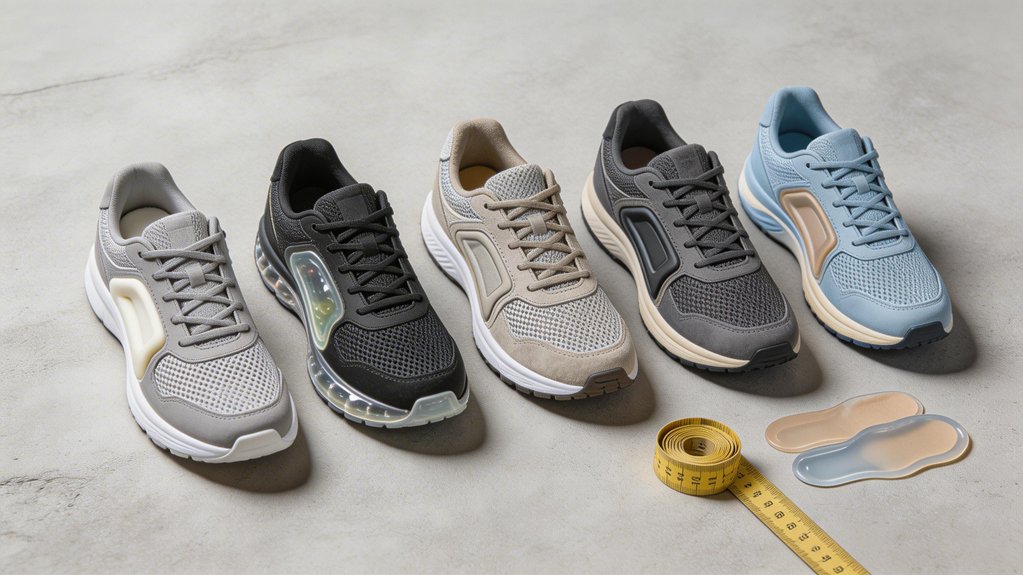
A good walking shoe fits well before it does anything else. Try shoes on late in the day, wear the socks you will walk in, and leave room for your toes.
Cushioning and a sole that bends easily come next. Check the fit first, then the cushioning, and walk around the store before you decide.
How Should Walking Shoes Fit?
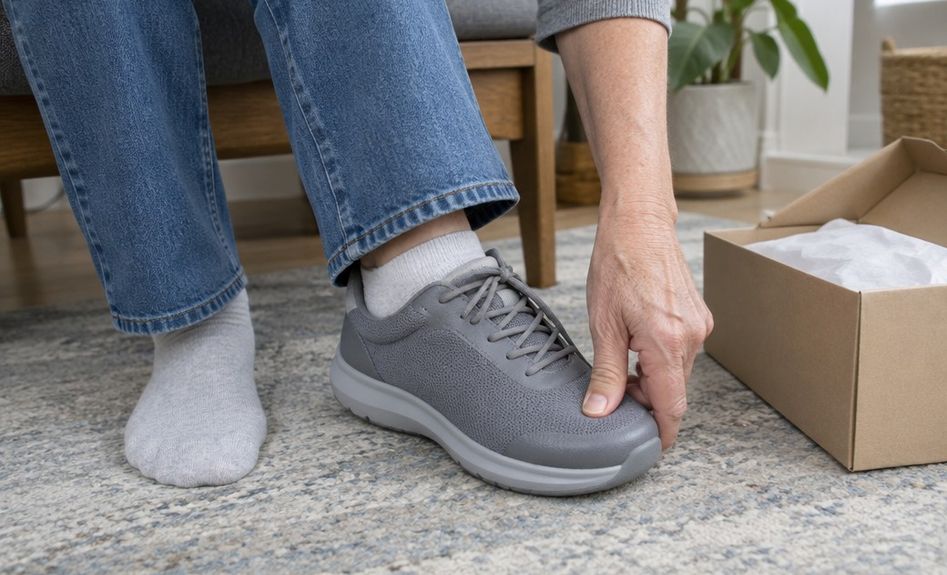
Length, width and toe room all need to feel right, because fit is where comfort starts.
The American Academy of Orthopaedic Surgeons (AAOS) says feet swell throughout the day, so try shoes on in the afternoon or evening. It also recommends at least half an inch between your longest toe and the tip of the shoe.
Check your heel too. It should be held firmly without slipping. If your ankles also swell on long walks or trips, see these compression sock picks for walking and travel.
If one foot is larger than the other, fit the larger one. The toe box should let your toes spread and wiggle.
If you want a wide choice of sizes and widths, you can compare women’s walking shoes on Amazon.
Some links on this page go to Amazon, and the site earns a small commission when a reader buys through one.
Does Where You Walk Change the Shoe You Need?
For sidewalks, tracks and park paths, a regular walking shoe is all you need. AAOS describes walking shoes as built with a smooth tread for the heel-to-toe roll of each step.
Uneven, muddy or wet ground is different. A shoe with a grippier tread feels steadier there.
Shoes also wear out faster on hard pavement. Check the soles now and then for thin spots, and replace shoes when they feel flat.
For comfort on these surfaces, look at comfortable walking shoes designed for older adults and beginners.
When Does Arch Support Matter?
You don’t need to know your foot type to buy a good walking shoe. AAOS says walking shoes already provide stability through the arch.
Some people want more. If your arches ache after a walk, a shoe store with a trained fitter can watch you walk and suggest support. AAOS notes that a professional is the best way to learn your foot type.
If you have diabetes, numbness in your feet or ongoing foot pain, ask your doctor or a podiatrist before you choose arch support.
You can also compare orthopedic walking shoes with arch support on Amazon and bring your favorites to a fitting.
Pick the Right Cushioning and Sole Flex for Your Stride
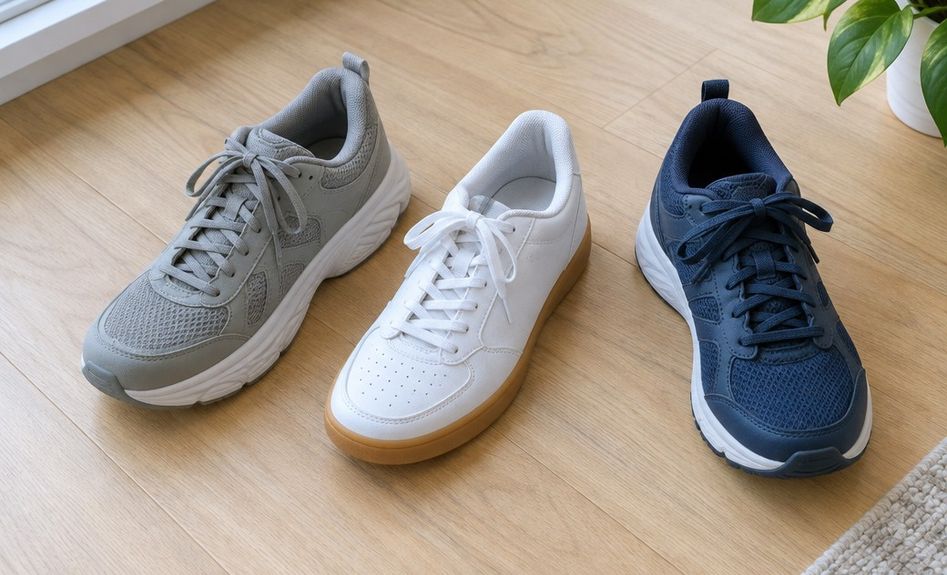
Look for a sole that absorbs shock without feeling mushy and bends easily at the ball of your foot.
Press your thumb into the midsole. It should give a little and spring back. A shoe that feels like a pillow can feel unsteady as you walk.
Hold the shoe by the heel and toe and bend it. It should flex where your foot flexes, not in the middle of the arch.
A flexible sole supports the natural roll of your step and eases strain on your feet during a long walk.
You can compare men’s walking shoes on Amazon for options with these features.
Fitting Checks to Do in the Store
A few minutes of testing in the store saves you from shoes that rub.
- Wear the same socks you will use on your walks.
- Walk several laps around the store and notice any rubbing or pressure.
- Check that your heel stays put and the shoe bends easily at the ball of your foot.
- Try both shoes, and try more than one brand, since fit differs from brand to brand.
What If You Do More Than Walk?
If you do one activity more than twice a week, AAOS suggests a shoe made for it. For a week that mixes several kinds of exercise, it suggests a cross-training shoe.
- Court games such as pickleball or tennis: a solid tread and support in every direction for quick side steps.
- Strength work with bands or light weights: a flat, firm sole that keeps you steady. Very soft foam can feel wobbly when you stand still and push.
- Low-impact fitness classes: a cross-trainer, which blends some cushioning with side support.
- Jogging: a cushioned running shoe built to absorb repeated impact.
Someone who walks most days and plays pickleball twice a week is better served by two pairs than by one compromise.
If you also take a class or play a sport, supportive athletic shoes made for that activity can be a separate pair. If you jog as well as walk, you can compare running shoes on Amazon and filter by cushioning.
When to Replace Your Walking Shoes
Shoes wear out on the inside before they look worn. Watch for these signs:
- Soreness in your feet, knees or hips after a walk that used to feel fine
- Cushioning that feels flat, especially under the heel and the ball of the foot
- Creasing, tears, or the sole pulling away from the upper
- A shoe that tilts to one side when you set it on a table
The foam breaks down with use. AAOS notes that a running shoe has lost about 45 percent of its shock absorption by 500 miles.
Replace your shoes when these signs start to add up.