
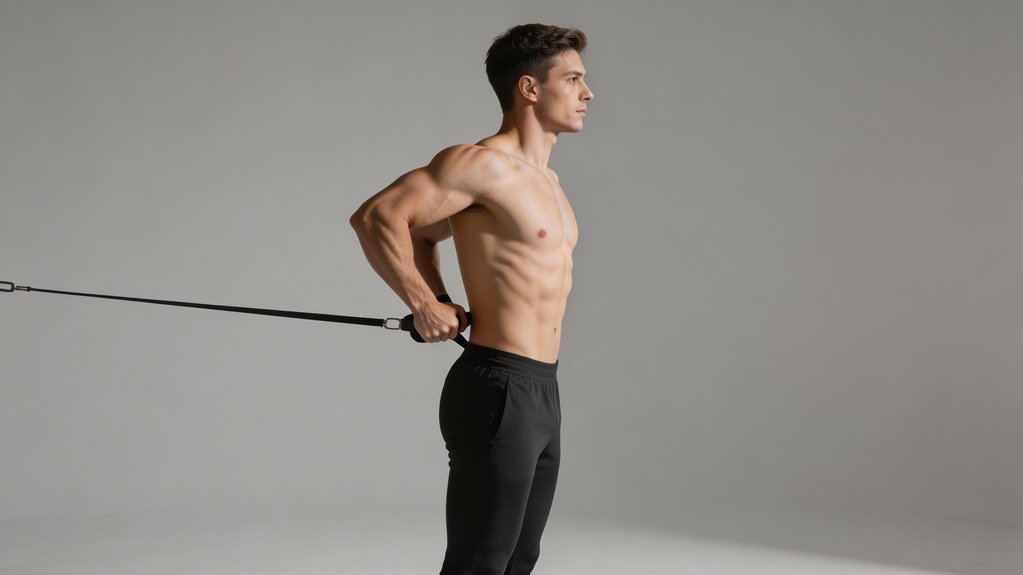
You’ll fix slouching by strengthening your core and back through planks, Superman exercises, and seated rows, aim for three weekly sessions.
Tight chest muscles counteract this work, so stretch with doorway lunges and child’s pose post-workout when muscles are warm.
Set hourly reminders to check your alignment, adjust your workspace so your monitor’s at eye level, and practice chin tucks during breaks.
You’ll notice real improvements within two to three weeks, with lasting changes around six to eight weeks.
Stick with it consistently.
Why Poor Posture Causes Pain and Injury

When you slouch or let your shoulders round forward, you’re forcing your muscles and joints to work in ways they weren’t designed to handle.
This constant misalignment creates muscle imbalances where some muscles tighten while others weaken.
Your spine bears extra stress it shouldn’t carry, leading to chronic pain in your neck, shoulders, and lower back.
Over time, poor spinal alignment compresses nerves and strains ligaments.
You’ll notice headaches, reduced mobility, and fatigue develop gradually.
Without proper injury prevention strategies, these issues can worsen and lead to more serious complications that sideline your fitness progress.
You can reverse this damage through targeted exercise that restores proper alignment and muscle balance.
Strengthen Your Core and Back to Fix Slouching
Your core and back muscles are the foundation that holds your spine upright against gravity’s constant pull. When you strengthen these areas, you’re directly addressing slouching.
Planks and Superman exercises build core stability by engaging your abdominal and back muscles simultaneously. Seated rows and shoulder retractions develop back strength, pulling your shoulders into proper alignment. Glute bridges activate your lower body while supporting your spine.
These exercises work together, creating muscular support that makes standing tall feel effortless. Practicing them three times weekly gradually transforms your posture and reduces strain on your neck and shoulders.
Before beginning any new exercise routine, it’s important to start your strength training journey safely with proper form and progression to avoid injury.
Stretches That Open Your Chest and Shoulders
After you’ve built strength in your core and back, it’s time to address the flip side of good posture: opening up your chest and shoulders.
Tight chest and shoulder muscles pull you forward, undoing your strengthening work.
Chest stretches like the towel roll stretch and doorway lunge directly combat this tightness. Hold each stretch for 20-30 seconds, breathing steadily.
The child’s pose and forward fold also lengthen your spine while releasing shoulder tension.
Improving shoulder mobility through consistent stretching helps your shoulders sit back naturally.
For best results, use static stretching after your workouts when your muscles are warm and pliable.
When you combine these chest stretches with your strength training, you’ll notice better alignment and less discomfort.
Simple Posture Fixes You Can Use Every Day

While strengthening and stretching exercises form the foundation of better posture, the real magic happens when you apply these principles throughout your day.
Set daily posture reminders on your phone every two hours to check your alignment. Adjust your ergonomic workspace tips by positioning your monitor at eye level and keeping your feet flat on the floor.
Stand against a wall for sixty seconds each morning to reinforce proper spinal positioning.
Practice chin tucks during work breaks. Incorporating balance exercises into your routine can further enhance your stability and reduce your risk of falls.
These small, consistent actions compound over weeks, creating lasting postural improvements that serve both your physical health and your ability to help others effectively.
How Long Until You See Real Posture Improvements?
Consistency with daily posture checks and wall exercises pays off, but timing matters.
You’ll notice initial improvements within two to three weeks of regular exercise.
Real, lasting changes emerge around six to eight weeks when your body adapts:
- Muscle memory develops as you strengthen your core and back
- Awareness increases, making proper alignment feel more natural
- Postural habits begin replacing slouching patterns permanently
Your posture timeline depends on exercise consistency. Skipping workouts slows progress considerably.
Most people see noticeable differences after two months of dedicated practice.
Incorporating rest days into your routine allows your muscles to recover and adapt more effectively.
Stay committed to your routine, and you’ll transform how you carry yourself daily.