
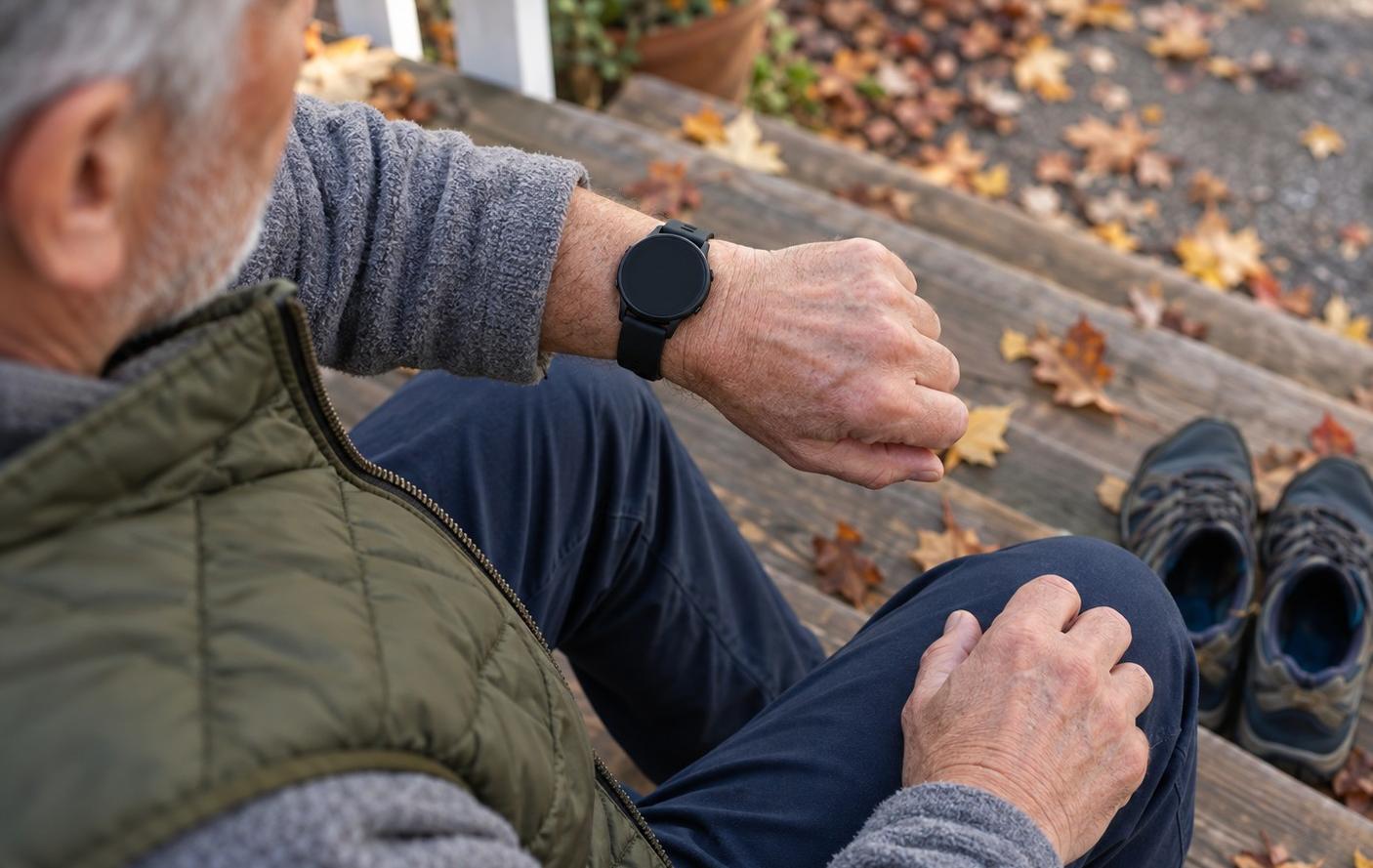
Your watch now shows a VO2 max number, and the tables below have a row for your age. Find your decade and your sex, and you can see roughly where that number sits.
VO2 max is the most oxygen your body can use during hard exercise. A higher number means higher aerobic fitness.
This is general information, not medical advice. If a number worries you, or you have heart or lung symptoms, check with your doctor.
What VO2 max measures
Picture yourself on the porch after a walk, glancing at your wrist. The number there is a guess at how much oxygen you could use if you pushed to your limit.
It is written in milliliters of oxygen per kilogram of body weight per minute. The abbreviation is mL/kg/min.
Dividing by body weight puts people of different sizes on one scale.
VO2 max by age and sex
The FRIEND registry, short for Fitness Registry and the Importance of Exercise: A National Data Base, collected treadmill tests from US labs. The 2015 report covers 7,783 tests from people free of known heart disease.
These are measured values, not watch estimates. Each cell shows the 25th, 50th (the median) and 75th percentile, in mL/kg/min.
The median is the middle of the group. A quarter of people score below the first figure, and a quarter score above the third.
Women
| Age | 25th / 50th / 75th percentile |
|---|---|
| 50–59 | 19.9 / 23.4 / 27.6 |
| 60–69 | 17.2 / 20.0 / 23.8 |
| 70–79 | 15.6 / 18.3 / 20.8 |
Men
| Age | 25th / 50th / 75th percentile |
|---|---|
| 50–59 | 27.1 / 32.6 / 39.7 |
| 60–69 | 23.7 / 28.2 / 34.5 |
| 70–79 | 20.4 / 24.4 / 30.4 |
Source: Kaminsky et al., 2015, Table 3, men and women from the FRIEND registry, treadmill tests with measured VO2 max. The figures describe the spread of people who were tested, not a pass or fail.
The same report found that fitness declined by about 10% per decade across the adult years.
A lower number at 70 than at 50 is the expected pattern.
Why your watch number is an estimate
A watch does not measure the oxygen you breathe. It estimates the figure from other data, such as your heart rate.
In one small study, 30 healthy adults, most of them young and very fit, wore an Apple Watch for 5 to 10 days and then took a treadmill test in a lab.
The watch underestimated VO2 max by 6.07 mL/kg/min on average, with an average error of about 13 percent.
That is one study of one brand, so treat it as a caution and not a verdict. Read your watch figure as a range, not a precise score.
It may still help you see your own trend, read loosely. If you are choosing one, fitness trackers for daily steps are compared on their own page.
What a long-term study links to fitness
Researchers at Cleveland Clinic, a nonprofit academic medical center in Ohio, followed about 122,000 adults for a median of 8.4 years. Everyone had been referred for a treadmill test.
Adults in the lowest fitness group had about five times the risk of dying compared with the elite group. The study, in JAMA Network Open, said the gap was comparable to or greater than smoking or diabetes.
This is an association.
It does not prove that raising your number changes your risk. Fitter people may differ in other ways too.
Across the whole range, lower fitness went with higher risk. How much activity it takes is covered in the research on how much exercise helps you live longer.
How a beginner can raise it
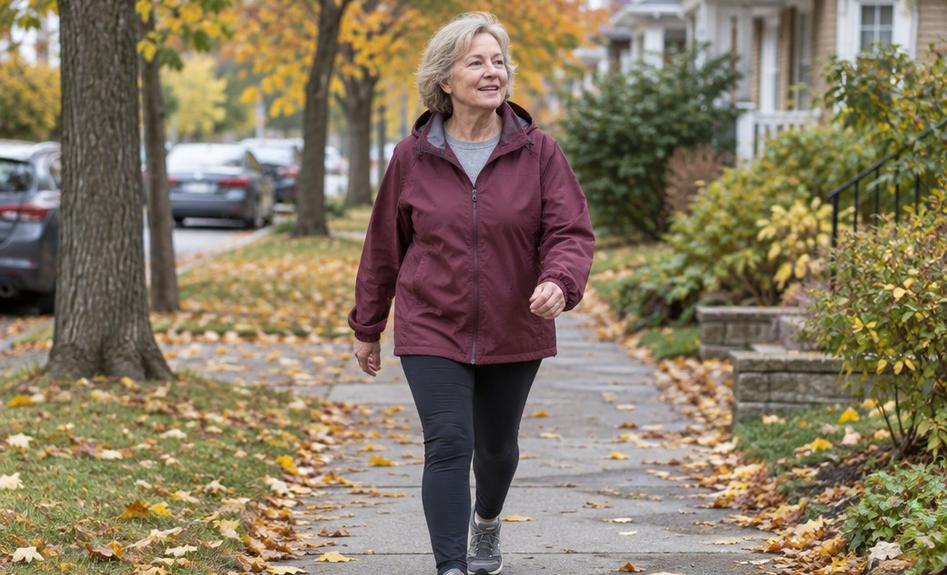
The National Institute on Aging, part of the US National Institutes of Health, says aerobic activity raises your breathing and heart rate. Done consistently, it improves your endurance and the health of your heart and lungs.
Its advice is to gradually build up to at least 150 minutes of moderate aerobic activity a week. A brisk walk counts, and you need no equipment.
Moderate means you are breathing harder but can still hold a conversation. You can check this without a gadget, as how to monitor exercise intensity explains.
Start with the minutes you can manage, and add a few each week.
You do not need to push to your limit; moderate activity is what the NIA recommends.
Finding your row

Go back to the table and read across your row.
Note which of the three figures your watch number is closest to.
Then look one column to the right. For a woman aged 60–69 on the 25th percentile, that next figure is 2.8 points higher, 20.0 instead of 17.2. A man the same age needs 4.5 more points to reach 28.2.
Those gaps are smaller than the average error in the watch study above, so aim at the direction of the trend, not the exact figure.